
What will AI do to human creativity?
See now you are thinking why am I discussing AI in a woodworking article?
Although AI and human creativity are a raging topic of discussions among all in 2026. A very similar question has been riddling the woodworking forums for years.
For the longest time, the image of a true woodworker was someone covered in sawdust, hunched over a workbench with a hand plane or a traditional chisel. And maybe a drink on his/her workbench.
So, when a machine enters the shop that is guided by a computer rather than a steady hand, it is natural to ask: Is a CNC router just a shortcut? Or is it actually woodworking?
Now you see, I look at it a bit differently. In all the subjectivity that follows the word creativity, true art is really about knowing how to put everything in its proper place. True creativity has nothing to do with the act but the actor.
As I mentioned when we explored the numbers behind building a woodworking venture, today human minds are turning towards freedom more than anything else.
That thirst for freedom isn’t just about being your own boss; it is about the freedom to create at the speed of your imagination.
Right now, in 2026, we are right in the middle of the “Narrative Interior” trend. People aren’t just buying functional furniture; they are looking for pieces with a story, intricate geometric inlays, topographical maps carved into coffee tables, and highly personalized heirloom designs.
You can absolutely craft these by hand, but if you want to turn a profit and satisfy that creative thirst without burning out, you need a way to scale.
This is where the CNC router becomes your “Digital Chisel.”
It doesn’t replace you. The machine won’t envision the design, select the perfect hardwood grain, or apply that flawless final finish.
You do.
The CNC is simply the ultimate team member that takes the heavy lifting out of the equation, allowing you to focus on the art and the business.
Who is a CNC Machine Really For?
Before we dive into the machines themselves, let me be completely honest with you here. If you are an absolute beginner who has never held a sander or driven a screw, I do not recommend getting a CNC machine straight away.
You see, automation machines like these are expensive, and bringing them in too early will pull you away from learning about woodworking the right way.
You need to first learn about all the basics, pursue some creative projects using traditional power tools, and see how you are feeling about yourselves.
But, if you have been at this for a while and you already have parts in place for a good side hustle or a business, a CNC machine is a fantastic investment.
For people who are already at this stage, your prime thinking line should be around scaling.
Remember the golden rule of business development we discussed in the previous article: start small but move steadily.
Purchasing a CNC router is that steady move.
When you start getting requests for bulk orders of custom signs, complex kinetic sculptures, or intricate geometric cutting boards, the exact kind of projects that actually sell online, manual methods simply take too long.
A CNC brings in two prime benefits: speed and creativity.
The products and designs that would take you hours to create using manual power tools can be produced fairly quickly, and with mathematical precision, using a CNC.
If you have the demand for it, and the thirst to grow your venture, I don’t see why you should not invest in one. So, let’s look at the best machines available this year to help you make that leap.
Top 7 CNC Routers for Your Small Home Shop
By now, you likely have a good sense of whether you’re ready to bring a “digital chisel” into your shop.
If the answer is yes, then the next challenge is navigating the sea of specifications, bed sizes, and spindle speeds.
I’ve spent a considerable amount of time researching the current landscape of home-shop CNCs. My goal wasn’t just to objectively find the best machines, but to find the ones that offer the best “return on creativity.” It’s a subjective decision that requires a nuanced outlook.
I’ve looked for reliability, ease of setup, and, most importantly, the precision required to turn a simple piece of stock into an heirloom-quality product.
Whether you are looking for your very first desktop unit to learn the ropes, or a heavy-duty workhorse to scale your side hustle into a full-time business, one of these seven machines will likely be the right fit for your bench.
Let’s start with a machine that has become a bit of a legend for its balance of power and user-friendliness.
1. Next Wave CNC Shark HD510 (The Production Powerhouse)
Having a Shark HD510 means your shop stops being a hobby space and starts being a production space. I’ve always believed that in business, you should start small but move steadily. The HD510 is that “steady move.” It’s designed for the woodworker who has matured past entry-level kits and needs a machine that can handle real-world workdays without flinching.
Best Seller
In Stock
Next Wave Shark HD510 – Precision & Power
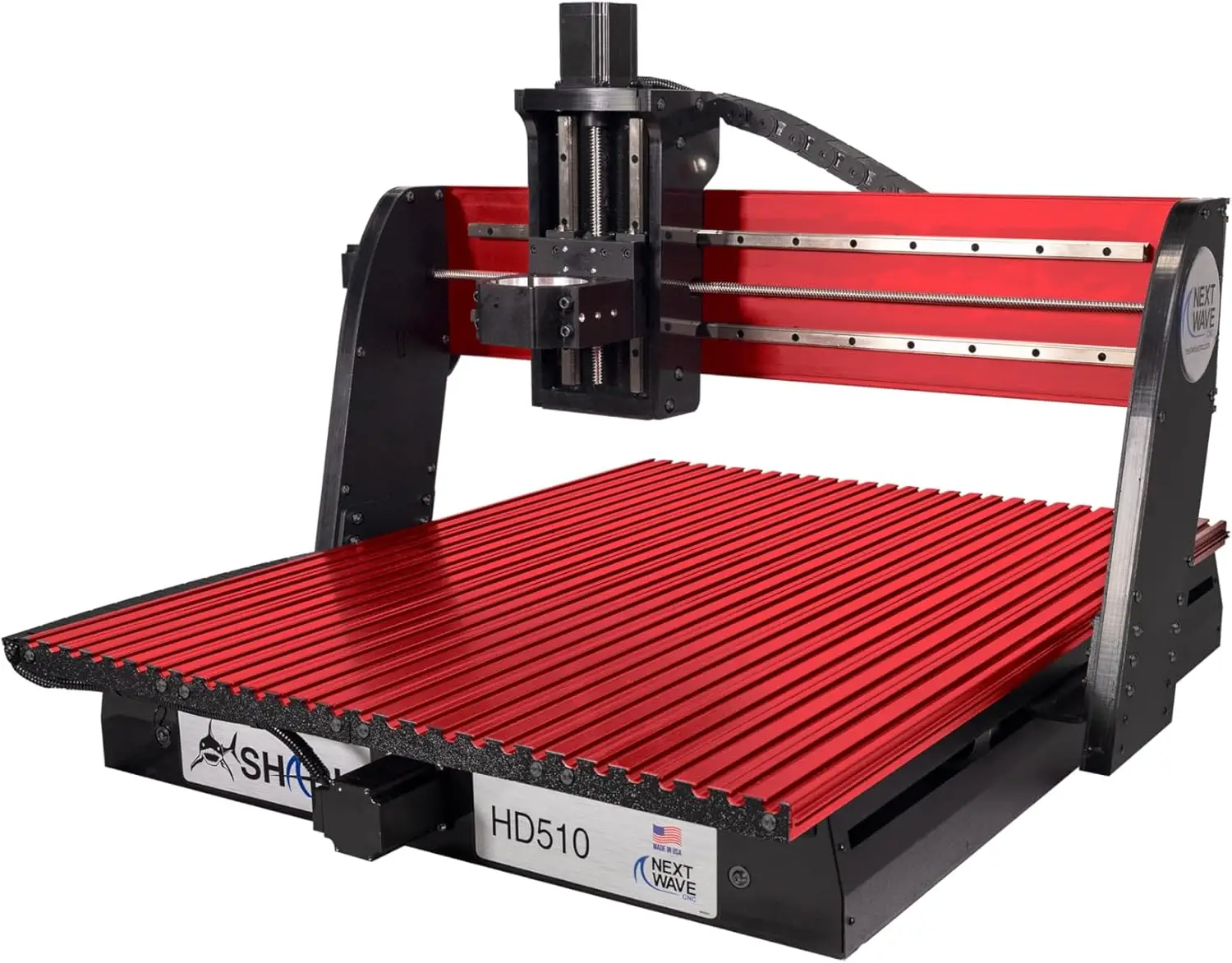
- Virtual Zero Unlimited: Exclusive $149-value software included; it “maps” warped wood surfaces to ensure perfectly even carving.
- Heavy-Duty Gantry: Reinforced aluminum and steel gantry with interlocking aluminum table for maximum rigidity.• Industrial Components: Anti-backlash, wear-compensated leadscrews and linear rails on all axes for mathematical accuracy.
- LCD Pendant Controller: Full-color touchscreen interface; run your projects via USB without needing a computer in the shop.
- VCarve Desktop Included: Comes with the latest version of Vectric VCarve Desktop ($349 value) and a 3D model library.
Pros
- Warped Wood Solution: The “Virtual Zero” technology is a game-changer; it automatically adjusts your design to fit the actual curves of your wood, perfect for those “Narrative Interior” projects.
- No Computer Required: The pendant interface is incredibly intuitive. You just load your project via a USB drive and start cutting, keeping your electronics safe from sawdust.
- Impressive Z-Travel: With 7 inches of vertical clearance, you can carve into thick slabs or use long bits for deep-reach projects that other machines simply can’t handle.
- Made in the USA: Includes USA-based technical support and a 2-year factory warranty, offering peace of mind for such a significant investment.
Cons
- Router Not Included: You’ll need to provide your own 2.25HP router (like the Bosch 1617 or DeWalt 618) or upgrade to their spindle system.
- Weight & Footprint: At nearly 100 lbs (boxed weight much higher), this requires a dedicated, sturdy workbench.
- Learning Curve: While user-friendly, the “Virtual Zero” functions require a bit of practice to master for complex surfaces.
You see, the reason I find the Shark HD510 so endearing is that it understands the “thirst” for precision.
In my engineering days, I learned that a machine is only as good as its rigidity. By using steel-encased gantry legs and linear guides, Next Wave has created a machine that lets your mind focus on the design while it handles the physics.
It is the ideal machine for the “Side Hustle” phase we talked about. Whether you’re batching out Roman numeral clocks or complex desk organizers, the HD510 offers that raw, real accuracy that makes your customers wonder how you did it.
2. Onefinity Elite Foreman (The Social Media Darling)
I am putting Onefinity Elite Foreman in the second order of priority because it is the machine that finally answered the “thirst” for a CNC that doesn’t require a degree in mechanical engineering to assemble.
In my previous articles, I’ve often mentioned that the actor is more important than the act, and the Onefinity is designed to let the “actor” start creating almost immediately.
While other machines can take a full weekend to calibrate, this one is famous for going from the box to its first carve in under an hour.
Best Seller
In Stock
Onefinity Elite Foreman – The PC-Free Powerhouse
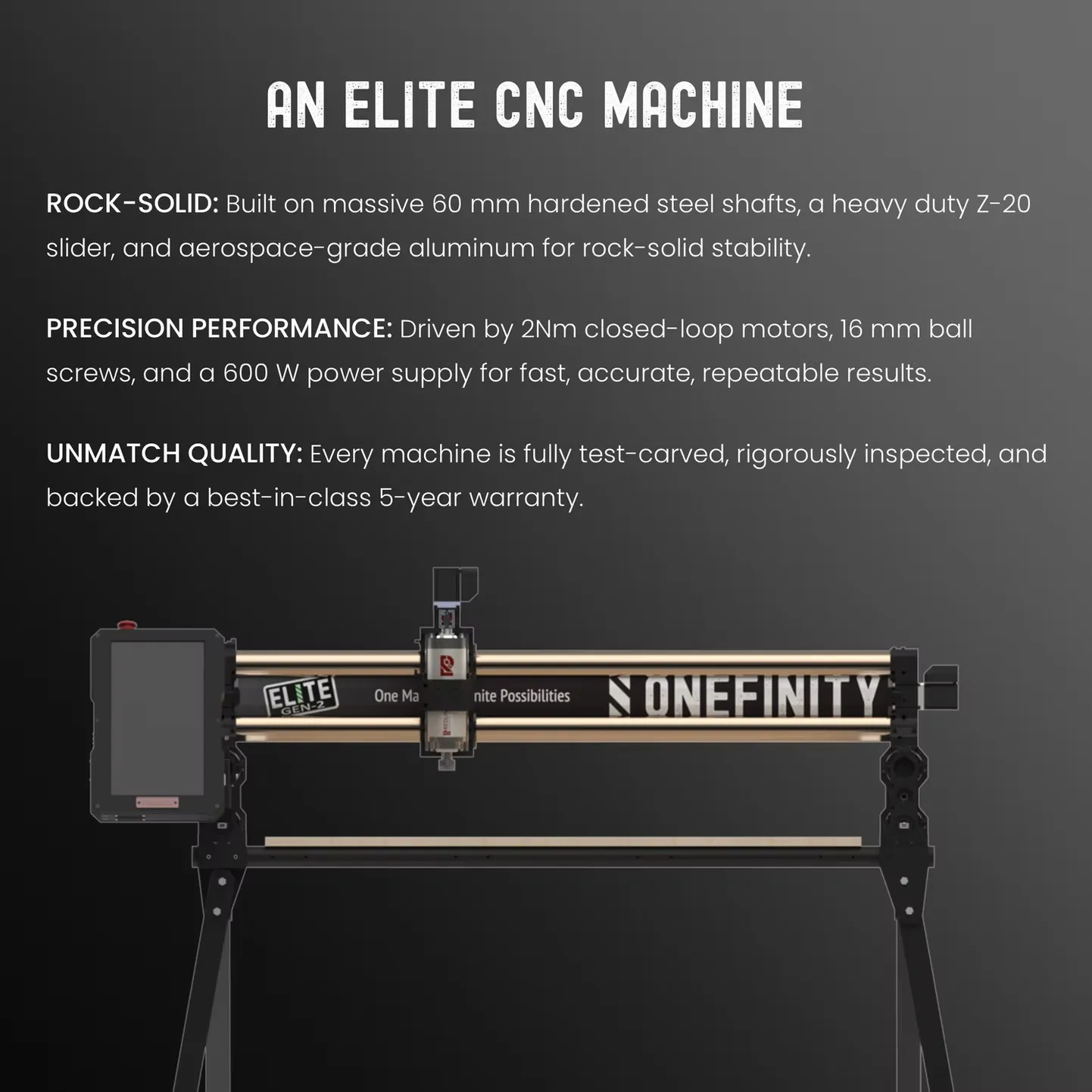
- MASSO Touch Control: A massive 15-inch industrial grade touch screen, no dusty laptop or unstable Wi-Fi required.
- Circular Steel Rails: Uses rigid, 35mm (X) and 40mm (Y) hardened steel shafts that offer incredible resistance to flexing.
- Infinite Tiling: The open-ended frame allows you to “tile” your projects, meaning you can carve pieces much longer than the 48″ bed.
- Closed-Loop Steppers: Features “anti-skip” technology that automatically stops the machine if it hits an obstruction, saving your workpiece.
- Elite Gen 2 Motion: Includes 16mm ball screws on all axes for silent, high-speed, and ultra-precise travel.
Pros
- The MASSO Advantage: This isn’t just a controller; it’s a dedicated industrial computer. It features “Power Loss Recovery,” so if your shop loses power mid-carve, it remembers exactly where it left off.
- No Stretchy Belts: By utilizing ball screws instead of rubber belts, the Elite Foreman eliminates the maintenance headache of “belt tensioning” and prevents the “chatter” marks often seen on cheaper machines.
- Fastest Setup in Class: The machine arrives semi-assembled. You essentially bolt the rails together, plug in the color-coded wires, and you are ready to square the machine.
- Vastly Expandable: It is designed to work seamlessly with a 4th-axis rotary or even an Automatic Tool Changer (ATC) as your business grows.
Cons
- Heavy Footprint: At 48″ x 48″ of cutting area, this machine is massive. You will need a very large, dedicated table that can handle over 200 lbs of weight.
- Wait Times: Because of its viral popularity on social media, Onefinity often has a 4-8 week lead time for new orders.
- Wasteboard Not Included: You will need to source and flatten your own 3/4″ MDF wasteboard, which is a bit of a “Day 1” project for every owner.
The thing that makes the Onefinity Elite Foreman so special is that it addresses the “fear” many woodworkers have about technology.
We want the precision of a computer, but we don’t want to deal with the frustrations of Windows updates or USB disconnects in the middle of a $200 piece of Walnut.
It is a machine built for the “Side Hustler” who values their time as much as their craft. As we saw in the numerical proof for a woodworking business, efficiency is the only way to turn a hobby into a flourishing venture. The Foreman doesn’t just cut wood; it clears the path for you to focus on the next design.
3. SainSmart Genmitsu 4040-PRO MAX (The Desktop Powerhouse)
I know that for many of you, waiting 8 weeks for a machine to ship is a bit of a “creative buzzkill.” Not everyone can hold on to their creative juices for so long. And you don’t need to.
If you are looking for that same rigid, linear-rail design but you want the security of Amazon’s shipping and a more entry-friendly price point, the Genmitsu 4040-PRO MAX is the answer.
It is essentially the “little brother” to the industrial machines, perfect for the small wood projects.
Best Seller
In Stock
SainSmart Genmitsu 4040-PRO MAX
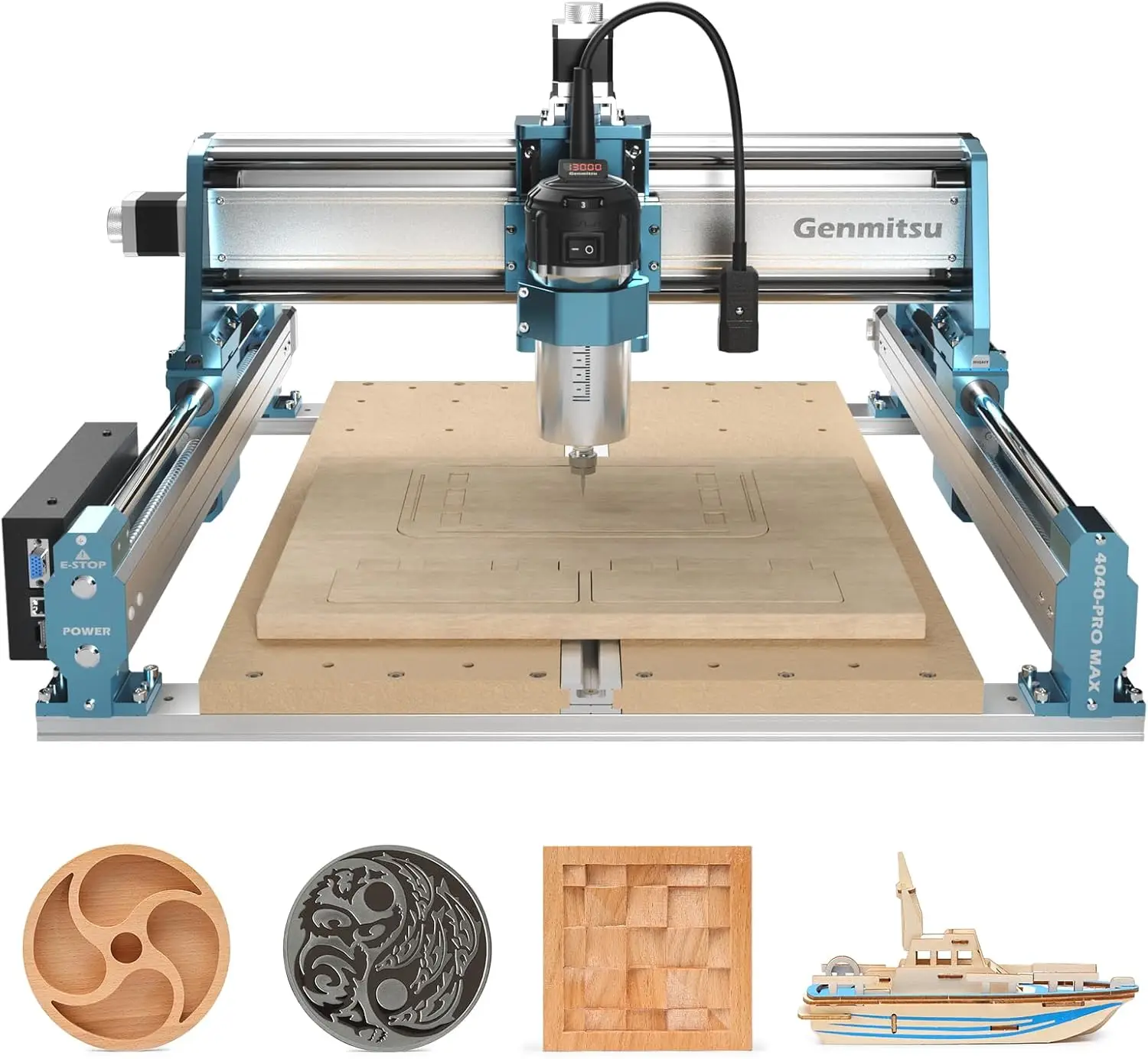
- Linear Rail Motion: Equipped with industrial-grade linear guides on the X and Z axes, offering ±0.005mm repeatable accuracy for professional-level surface finishes.
- 710W Power Included: Features a built-in 710W trimmer router with a digital speed display, providing high-torque cutting power without requiring an additional purchase.
- Reinforced Hybrid Bed: An upgraded MDF and aluminum T-track spoilboard with a central support bar to eliminate sagging and ensure a perfectly flat carving surface.
- Extended 100mm Clearance: A 40% increase in Z-axis pass-height over standard models, allowing you to work with thicker slabs and taller workpieces with ease.
- Ready for Scaling: A 32-bit control board that supports plug-and-play upgrades for a 4th-axis rotary module, offline controllers, and laser engraving heads.
Pros
- Instant Start: This is one of the few machines that arrives 90% pre-assembled. You can literally be making your first “test cut” in under 30 minutes.
- Integrated Spindle: Most CNCs in this list require you to buy a $150 router separately. The 4040-PRO MAX includes a 710W motor that is perfectly matched to the frame’s rigidity.
- Hybrid Spoilboard: The bed features a mix of MDF and aluminum T-tracks, giving you the best of both worlds for clamping different project shapes.
- Massive Community Support: Because this is an Amazon bestseller, there are thousands of YouTube tutorials and Facebook groups dedicated to helping you master it.
Cons
- Smaller Work Area: At roughly 16″ x 16″, you won’t be carving full-sized signs, but it’s the perfect size for “Aesthetic Cutting Boards.”
- Desktop Only: It is a benchtop machine. While rigid for its size, it doesn’t have the “brute force” of the Shark HD510 for deep, high-speed production.
- Basic Software: It uses GRBL (open-source) software. It’s free and powerful, but lacks the “polished” feel of the premium software included with higher-end units.
The reason this machine earns its spot is because it respects the “start small, move steadily” philosophy.
In my own engineering journey, I’ve seen too many people get paralyzed by the cost of heavy machinery. The 4040-PRO MAX removes that barrier.
It gives you the mechanical rigidity, those beautiful linear rails, without demanding you to take out a small business loan.
It is the perfect training ground. You can make your mistakes, learn the software, and even start batching out profitable aesthetic cutting boards or small custom gifts. And when the time comes to scale up to a Shark or a Laguna, this machine will have already paid for itself.
4. Snapmaker Artisan 3-in-1 (The Creative Multitool)
If you are the kind of multi-passionate maker who wants to combine laser-engraved leather, 3D-printed accents, and custom-carved wood into a single piece, this is your machine.
“Snapmaker Artisan delivers true industrial rigidity in a 3-in-1 format, allowing you to scale your creative business without buying three separate, space-consuming tools.”
Best Seller
In Stock
Snapmaker Artisan 3-in-1 (The Creative Multitool)
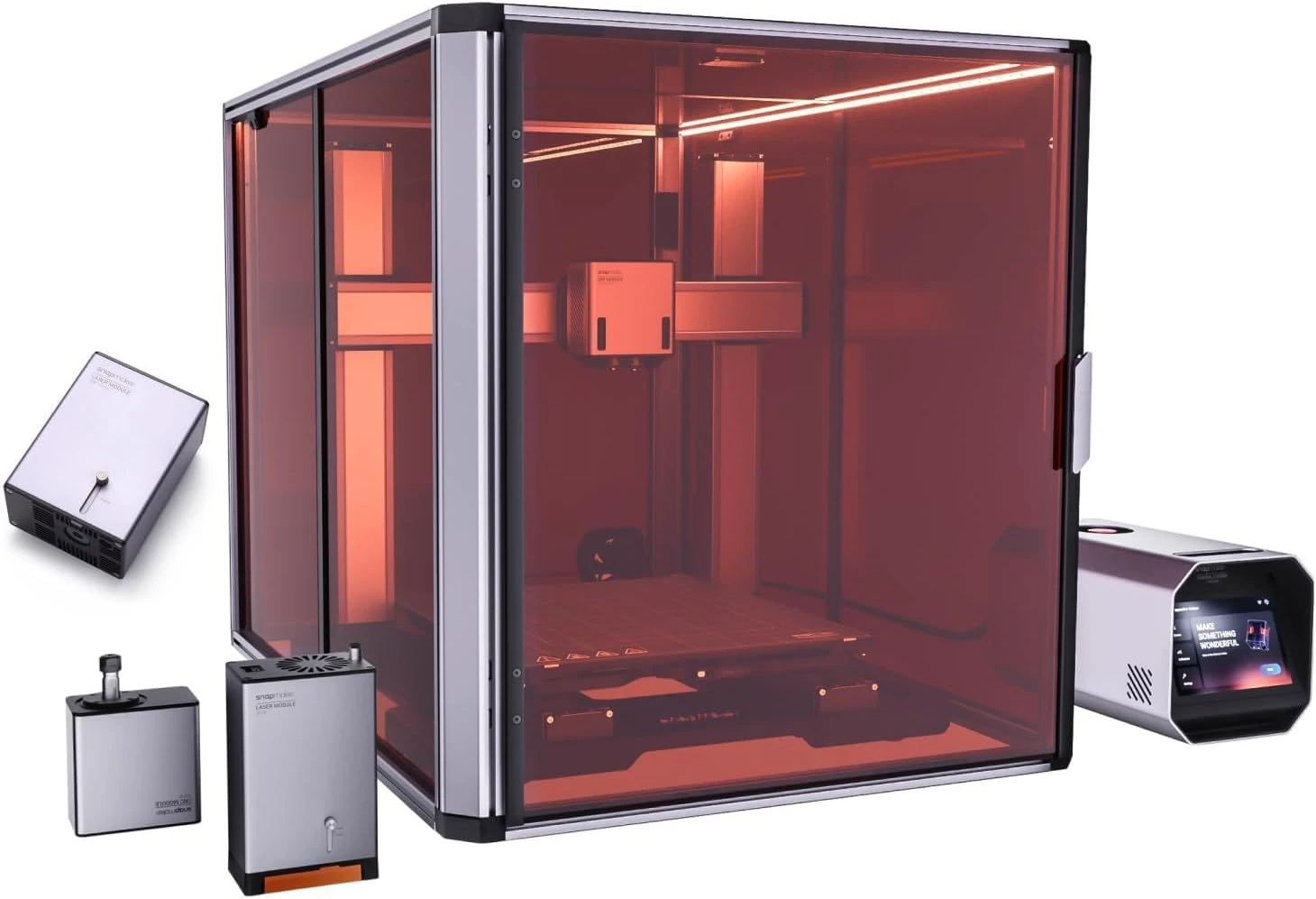
- The Ultimate 3-in-1 System: Seamlessly transitions between a 200W CNC router, a 40W laser cutter, and a dual-extrusion 3D printer using a screwless quick-swap module system.
- Massive 400mm Work Area: Features a sprawling 400 x 400 x 400 mm cubic build volume, allowing you to batch out small gifts or carve substantial architectural components.
- Industrial-Grade Linear Modules: Built with micron-level steel guiderails embedded directly into the heavy-duty extrusions, ensuring absolute rigidity and ±0.05mm repeatability.
- Enclosed & Shop-Safe: Arrives with a dedicated, heavy-duty safety enclosure that contains sawdust, filters laser smoke, and traps heat for advanced 3D printing filaments.
- 7-Inch Touchscreen Controller: Powered by an ultra-wide Android interface that completely eliminates the need for a dedicated shop laptop, keeping your electronics safe from debris.
Pros
- Space Efficiency: Consolidates three major digital fabrication tools into a single footprint, perfect for a growing garage shop.
- Capable Spindle: The 200W CNC module is vastly more powerful than previous iterations, easily handling dense hardwoods like Walnut and Maple without bogging down.
- Clean & Quiet: The included light-filtering enclosure is a massive money-saver that keeps your workshop perfectly clean and drastically reduces machine noise.
- Mixed-Media Mastery: Dual-extrusion 3D printing allows you to create complex jigs or custom hardware to complement your wooden designs.
Cons
- Commanding Footprint: While it saves space overall, the unit with its enclosure still requires almost a full cubic meter of dedicated bench space.
- Jack of All Trades: The 200W spindle is incredible for a multi-tool, but it won’t match the sheer material-hogging speed of a dedicated, router-based CNC like the Shark HD510.
- Involved Assembly: Because of the enclosure and the heavy-duty components, setting up the entire ecosystem will likely take an entire afternoon.
For many of us, the thirst for creation doesn’t stop at wood. You might envision a beautiful walnut jewelry box, but your mind also sees a custom 3D-printed latch and a laser-burned topographical map on the lid.
In a traditional setup, achieving that level of mixed-media artistry requires purchasing, learning, and finding space for three entirely different machines. The Artisan solves this by acting as a monolithic, all-metal fabrication hub.
As I have written before, true creativity has nothing to do with the act, but the actor. This machine removes the friction between your brain and the physical object.
It gives you the freedom to experiment across disciplines, allowing you to create the kind of highly personalized, mixed-material “Narrative Interior” pieces that command premium prices in today’s market. It is an investment in absolute versatility.
5. FoxAlien Masuter Pro (The All-Aluminum Professional Entry)
“If you want the structural rigidity of a professional machine without the industrial price tag, the Masuter Pro is the answer. It is built for the woodworker who is tired of the ‘flex’ in plastic-framed kits and wants a solid, all-metal foundation for their first high-stakes projects.”
Best Seller
In Stock
FoxAlien Masuter Pro (The All-Aluminum Professional Entry)
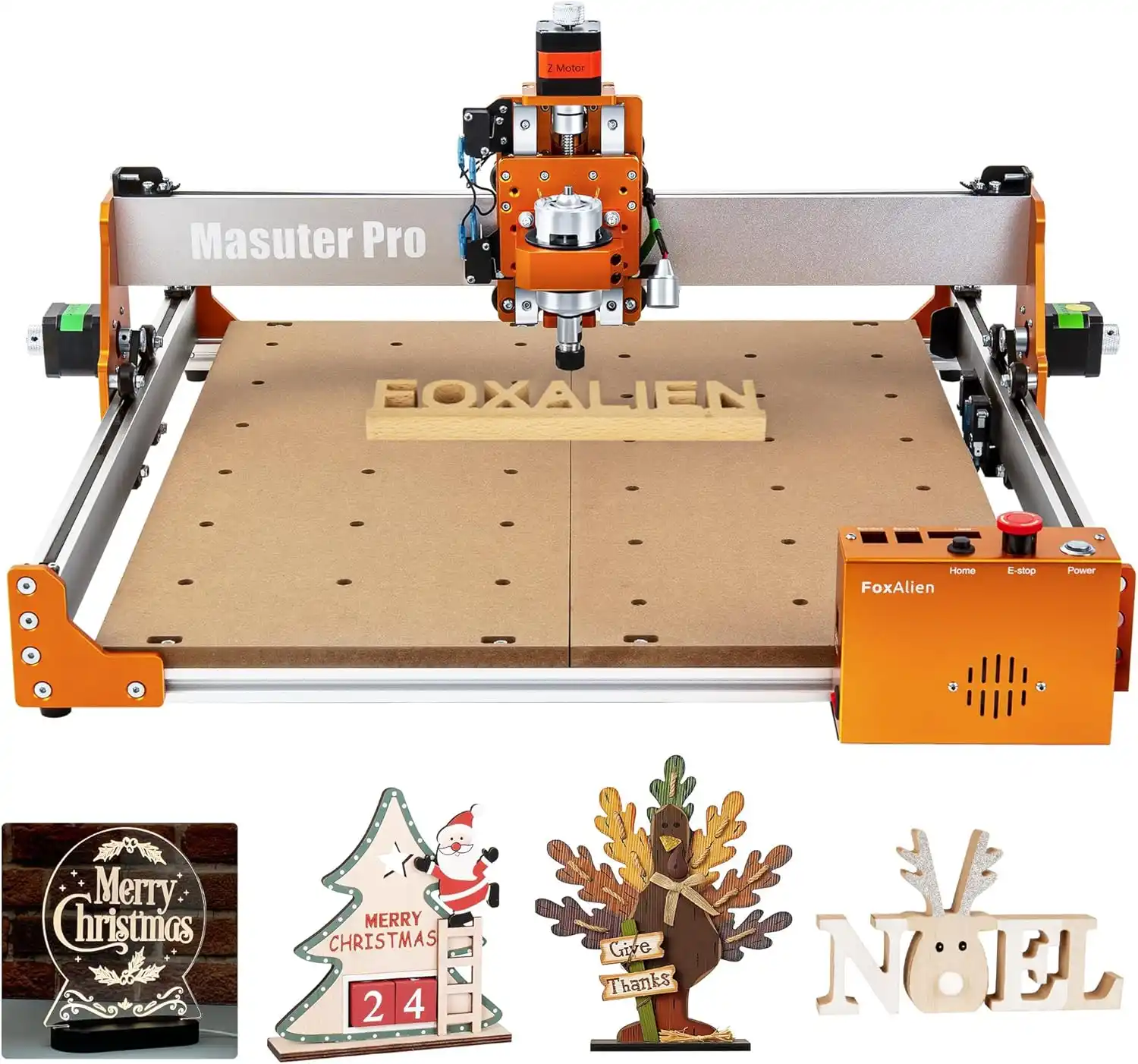
- All-Aluminum Rigidity: Features an upgraded all-metal frame and gantry with a linear-rail Z-axis, virtually eliminating the “chatter” and flexing common in entry-level machines.
- Large 400x400mm Work Area: Provides a spacious 15.75” x 15.75” cutting bed, perfectly sized for custom signage, serving boards, and “Narrative Interior” decor.
- Dual-Size Spindle Mounts: Includes both 52mm and 65mm clamps right in the box, making it natively compatible with the industry-standard Makita RT0701C router.
- Dust-Proof Control Box: Driven by a compact, 32-bit controller with an integrated emergency stop and home buttons, designed to thrive in a real-world, sawdust-heavy shop.
- Clear Upgrade Path: Built to grow with your business, featuring plug-and-play compatibility for NEMA 23 motor kits, 4th-axis rotaries, and 20W/40W laser modules.
Pros
- Exceptional Rigidity: The move to 6061 aluminum extrusions and linear Z-rails means your carvings stay precise even at higher feed rates.
- 15-Minute Assembly: Most major components arrive pre-assembled; you can realistically have this machine “homing” in less time than it takes to drink a cup of coffee.
- Integrated Work Light: Features a built-in Z-axis light that helps you monitor fine carving details, which is a lifesaver for aging eyes or dim workshops.
- Proven Affordability: Consistently offers one of the best “price-to-performance” ratios on Amazon, freeing up your budget for premium bits and lumber.
Cons
- Z-Axis Depth: While rigid, the 60mm Z-axis travel requires you to be mindful of your material thickness, especially when using longer reaching bits.
- Open-Source Software: It runs on GRBL-based software like Candle or Easel. It is powerful and free, but it lacks the “polished” proprietary feel of high-end industrial suites.
- Standard Motors: While the NEMA 17s are capable, users looking for high-speed production may eventually want to invest in the NEMA 23 upgrade kit.
Choosing your first CNC is often a battle between your budget and your ambition. The Masuter Pro is where those two forces find peace.
It doesn’t ask you to compromise on the materials, no plastic parts, no wood laminate, just pure, cold-rolled aluminum that stays true while you’re carving your vision into reality.
It represents the “Steady Move” we’ve talked about. It’s a machine that doesn’t just do the work; it teaches you how a professional machine should feel.
By starting with a frame this solid, you’re ensuring that your only limitation is your imagination, not the mechanical flex of your equipment.
6. Genmitsu PROVerXL 4030 V2 (The Industrial Precision Pick)
While most hobbyist machines rely on lead screws or belts, the PROVerXL 4030 V2 moves into the realm of true engineering with industrial ball screws.
“It is the perfect choice for the woodworker who wants to stop worrying about ‘backlash’ and start focusing on the kind of high-speed, high-accuracy production that a professional side-hustle demands.”
Best Seller
In Stock
Genmitsu PROVerXL 4030 V2
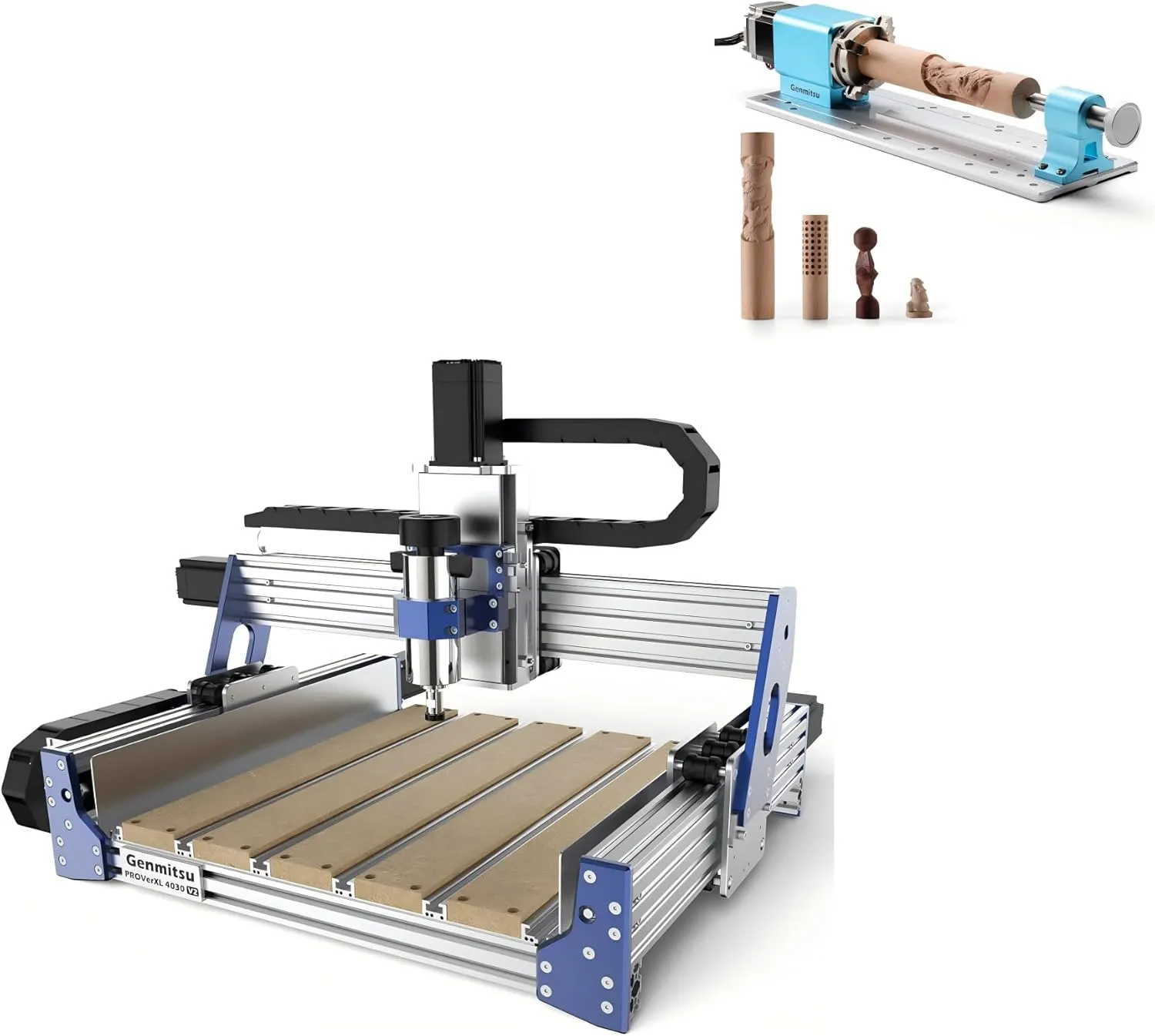
- Industrial Ball Screw Drive: Equipped with precision 1204 ball screws on all axes, virtually eliminating backlash and ensuring smooth, industrial-grade accuracy for complex carves.
- Closed-Loop Stepper Motors: Features high-torque NEMA 23 closed-loop motors that provide real-time feedback to the controller, preventing step-loss and protecting your workpiece from errors.
- All-Metal Structural Rigidity: Built with heavy-duty C-beam aluminum extrusions and an improved Z-axis structure for maximum stability when carving dense hardwoods or soft metals.
- High-Speed Performance: Capable of rapid travel speeds up to 5000mm/min, significantly reducing production time for 3D reliefs and multi-part “Narrative Interior” projects.
- Dual Spindle Compatibility: Arrives with a 400W high-torque spindle but includes an extra 65mm mount, making it natively ready for a Makita RT0701C router upgrade.
Pros
- Whisper-Quiet Operation: The combination of ball screws and closed-loop motors makes this one of the smoothest, quietest machines in its class, ideal for home garage workshops.
- “Fail-Safe” Accuracy: The closed-loop system is a massive insurance policy; if the bit gets stuck, the machine stops instead of ruining the rest of your expensive lumber.
- Massive Extension Path: This machine is a “forever” frame. You can easily upgrade it with 6060 or 1313 extension kits later, allowing you to carve full-sized furniture panels.
- Mostly Pre-Assembled: Arrives with the major axes pre-built, cutting down your setup time to under an hour so you can start creating almost immediately.
Cons
- Industrial Weight: At nearly 70 lbs, this is a solid, heavy machine. You will need a permanent, sturdy home for it on your workbench to handle the inertia.
- Software Learning Curve: To truly unlock the precision of ball screws, you’ll want to move past basic web-based software to more capable suites like VCarve or Fusion 360.
- Premium Investment: It sits at a higher price point than entry-level kits, but it saves you the cost of future accuracy upgrades by starting with industrial-grade mechanics.
The bridge between a hobby and a business is paved with reliability. When you are carving a project for a paying client, you cannot afford for a belt to slip or a motor to skip a step. The PROVerXL 4030 V2 is designed to remove those variables from your shop entirely.
By utilizing ball screws, the same technology found in six-figure industrial CNCs, this machine offers a level of “mechanical truth” that is rare at this price point.
It respects your time and your materials, allowing you to step away from the workbench with the confidence that the machine is executing your vision with mathematical certainty.
7. TwoTrees TTC-450 Pro (The Budget King)
There is a common misconception that you need a fortune to start a production-capable shop, but the TTC-450 Pro proves otherwise.
“TwoTrees TTC-450 Pro offers a sturdy, all-metal frame and lead-screw drive at a price point that makes it the ultimate ‘gateway’ for the serious hobbyist.”
Best Seller
In Stock
TwoTrees TTC-450 Pro
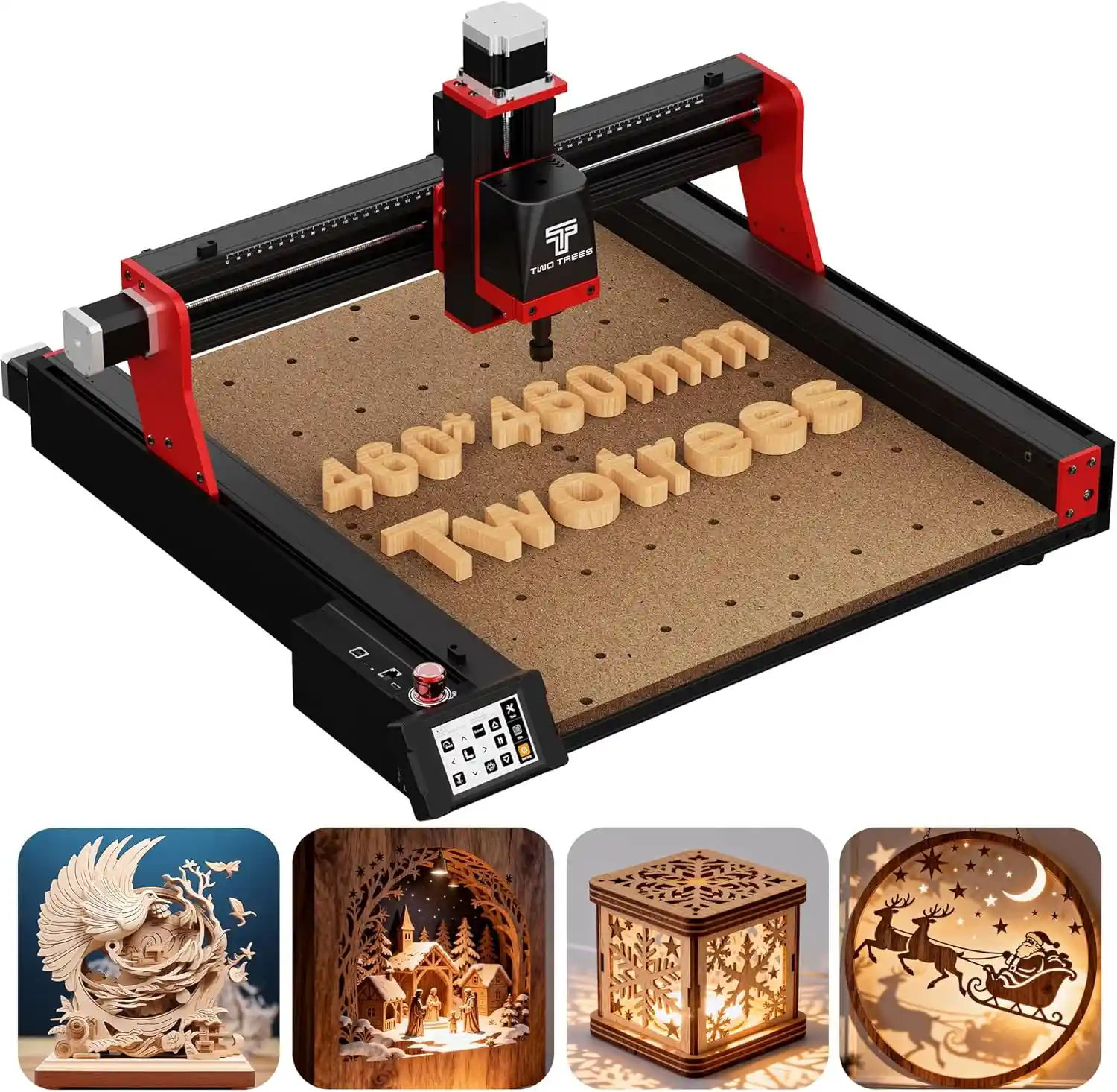
- Massive 460mm Bed: Offers an expansive 18.1” x 18.1” work area, providing significantly more room for custom signs and home decor than standard desktop models.
- Lead Screw Driven: Unlike cheap belt-driven kits, this machine utilizes high-precision T8 lead screws on all axes for increased rigidity and repeatable accuracy.
- Touchscreen & WiFi Control: Features a 3.5-inch IPS color touchscreen and 2.4G WiFi support, allowing for true offline carving without a dusty laptop tethered to your machine.
- All-Metal Structural Build: Constructed with reinforced sheet metal and aluminum profiles (upgraded from 6mm to 8mm gantry plates) for superior vibration damping.
- Versatile Upgrade Path: Designed to grow with you, featuring a control board that supports 500W spindle kits, 40W laser modules, and 4th-axis rotary attachments.
Pros
- Unbeatable Value: Delivers a robust lead-screw motion system and a large work area for a price that usually only buys a small, plastic-belt machine.
- Rapid Setup: Arrives nearly 70% pre-assembled; you can realistically move from unboxing to your first test-cut in under 45 minutes.
- Safety Features: Includes an integrated emergency stop and a protective spindle guard, preventing accidental burns or injuries during long production runs.
- Offline Connectivity: The ability to import files via SD card or WiFi means your expensive computer stays safe in the house, away from the workshop’s “ghost” (sawdust).
Cons
- Stock Spindle Power: The included 80W motor is excellent for engraving and light hobby work, but you will want to upgrade to the 500W motor for high-speed production in hardwoods.
- Learning Curve: While the hardware is straightforward, the offline controller and WiFi setup require a bit of patience to master during your initial shop setup.
- Heavy Weight: At roughly 34 lbs (net weight), it is a solid machine that requires a permanent, sturdy home on your workbench to manage cutting forces.
The journey into digital woodworking is often a series of “steady moves.” You don’t always need the most expensive machine on the day you start; you need the machine that gives you the best foundation for growth. The TTC-450 Pro is that foundation.
By opting for lead screws over belts and a rigid metal frame over acrylic, TwoTrees has created a machine that respects the craft.
It allows you to produce high-quality, sellable work, the kind of “Aesthetic Cutting Boards” and custom signs that fund your next big shop upgrade, without a massive upfront risk. It is the smartest way to turn a “thirst” for creation into a flourishing, self-sustaining side hustle.
Frequently Asked Questions
Investing in a CNC machine is a big decision, I agree. CNC routers are not your everyday grocery item you can grab without thinking.
For this reason I have tried to make this list as elaborate as I can and I keep the list updated, if I find a better product in time, of which one of the reasons is the price point too.
So, It’s natural to feel a mix of excitement and a bit of “analysis paralysis” at this stage.
To help you move from “browsing” to “building” with confidence, I’ve created this FAQ section and gathered the most pressing questions that land in my inbox, and those I feel will help make the decision process easier and remove any doubts that may creep up. If you have any questions apart from these feel free to post them down in the comments section, I will include them in this section with a post update.
1. What is the fundamental difference between a CNC Router and a CNC Mill?
While both use computer control, the difference is in the “sculpting” vs. “carving” approach. A CNC Router uses a high-speed gantry to glide over large, flat sheets of wood or plastic, making it fast and efficient for furniture and signs. A CNC Mill is a heavy, slow-moving tank designed to cut through solid blocks of hard metal like steel with micron-level precision.
2. Are CNC routers exceptionally loud for a home garage?
The machine’s motors are actually quite quiet; the “noise” comes from the spindle and the dust extractor. A standard wood router can reach 95 dB (think loud lawnmower), but switching to a water-cooled spindle and a muffled shop vac can drop that noise to a comfortable hum that won’t disturb your neighbors or your focus.
3. Is the learning curve too steep for traditional woodworkers?
If you can use a smartphone, you can learn to run a CNC. Modern 2026 software has moved away from complex coding to “drag-and-drop” visual interfaces. Most makers find that they can go from unboxing to their first successful “test cut” in under two hours, with the real “skill” lying in the digital design phase rather than the physical operation.
4. What can a CNC router actually do beyond simple signs?
A CNC is a “digital chisel.” Beyond signs, it allows you to cut perfect mortise and tenon joinery, carve intricate 3D bas-reliefs into cabinet doors, and create complex inlays that would take a master carver weeks to execute by hand. It turns your shop into a production facility that can repeat the same flawless piece a hundred times over.
5. Is a CNC router truly “worth it” for a small business?
The “worth” is measured in reclaimed time. A CNC handles the tedious, repetitive tasks, like cutting out 50 identical chair legs or drilling 200 shelf-pin holes, allowing the “actor” (you) to focus on the high-level assembly and artistic finishing that commands premium prices. Most professional users find the machine pays for itself within the first 3 to 6 months of active production.
Time to Choose the Best CNC Machine for ‘You’
Choosing the right machine is about matching the tool to the “actor” behind it. Whether you’re looking to scale a production line or simply want a reliable partner for your weekend creativity, having a clear view of the landscape makes the next step effortless.
To help you finalize your shop’s next evolution, I’ve distilled our top recommendations into this quick-reference guide, inspired by the precision of high-end tech reviews.
| Model | Unique Selling Proposition | Why this Model? | Link |
| Next Wave Shark HD510 | The Production Powerhouse | Pick this for professional, industrial-grade volume. | Check Product |
| Onefinity Elite Foreman | The Social Media Darling | Pick this for a high-power, Pinterest-ready shop. | Check Product |
| SainSmart 4040-PRO MAX | The Desktop Elite | Pick this for rigid, “Elite” precision in small spaces. | Check Product |
| Snapmaker Artisan 3-in-1 | The Creative Multitool | Pick this to master CNC, Laser, and 3D printing. | Check Product |
| FoxAlien Masuter Pro | The All-Metal Entry | Pick this for a solid, all-aluminum budget start. | Check Product |
| Genmitsu 4030 V2 | The Industrial Precision Pick | Pick this for silent, ball-screw mathematical accuracy. | Check Product |
| TwoTrees TTC-450 Pro | The Budget King | Pick this for the absolute best large-format value. | Check Product |
Let Your Creativity Fly High
So, you understand that ‘Human or AI?’ isn’t the right question.
Neither is “Can CNC be regarded as woodworking?”. AI is and should be an extension to your innate human genius and so should be a CNC machine.
It is supposed to help bring your art to life and do so quickly so that what you produce enhances your life or someone else’s if you chose to turn your creativity into business.
So, you don’t need to be conflicted between “traditional” and “digital”. As we’ve explored today, that friction is an illusion.
Whether you are holding a Japanese pull saw or calibrating a ball-screw gantry, the goal remains the same: to move from a state of thirst to a state of creation.
The machines on this list aren’t meant to replace your hands; they are meant to extend them. They are the silent partners that handle the repetition, the math, and the structural heavy lifting so that you, the actor, can stay focused on the artistry that actually matters.
By choosing to bring digital precision into your shop, you aren’t “taking the easy way out.” You are simply reclaiming your time and expanding your canvas.
Remember, the “best” machine isn’t the most expensive one on the list, it’s the one that actually gets turned on tomorrow morning. Start where you are, move steadily, and don’t let the fear of a learning curve stand in the way of your growth.
Your workshop is a living, breathing reflection of your ambition; it’s time to give it the tools it deserves to thrive.
I will see you at the next one.